EN
EN



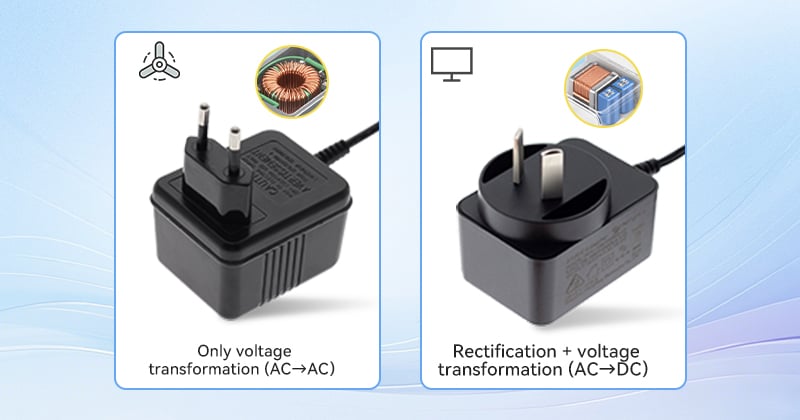
Navigating the technical landscape of power supply units is a practical necessity for procurement managers and engineers aiming to ensure device longevity. At its core, the ac vs dc power adapter difference centers on how electricity is managed and delivered to a specific application. While standard wall outlets provide high-voltage Alternating Current, or AC, almost all modern electronics—from LED displays to specialized medical equipment—require stable, low-voltage Direct Current, commonly known as DC. At Merryking, we specialize in bridging this gap through high-performance switching power supplies designed for global industrial standards.
The primary ac vs dc power adapter difference lies in the current flow within a circuit. Alternating Current is characterized by a bidirectional flow that reverses direction periodically according to local grid frequencies. In contrast, Direct Current flows in a single, unidirectional path. Most sensitive internal components, such as microprocessors and sensors, cannot tolerate the oscillating nature of AC. From my years of troubleshooting field failures, I have seen how an unstable power source can cause intermittent signal interference or even immediate circuit damage. A high-quality DC adapter acts as a critical regulator, converting the high-voltage alternating current from the grid into a smooth, consistent DC output that modern hardware demands for peak performance.
To transform the universal AC input from a wall socket into a usable DC output, an adapter must perform complex internal rectification. This is a key technical ac vs dc power adapter difference. While a basic transformer might only change the voltage level, a professional AC/DC adapter—like the wall-mount and desktop series offered by Merryking—utilizes a switching regulator to ensure stability. Our adapters are engineered to maintain ultra-low ripple and noise levels that meet strict industry thresholds. This precision ensures that the delivered energy is truly direct and steady. When consulting for industrial clients, I always emphasize that high-quality rectification is what prevents electronic noise from interfering with data signals, making the stability of the DC output just as vital as the voltage rating itself.
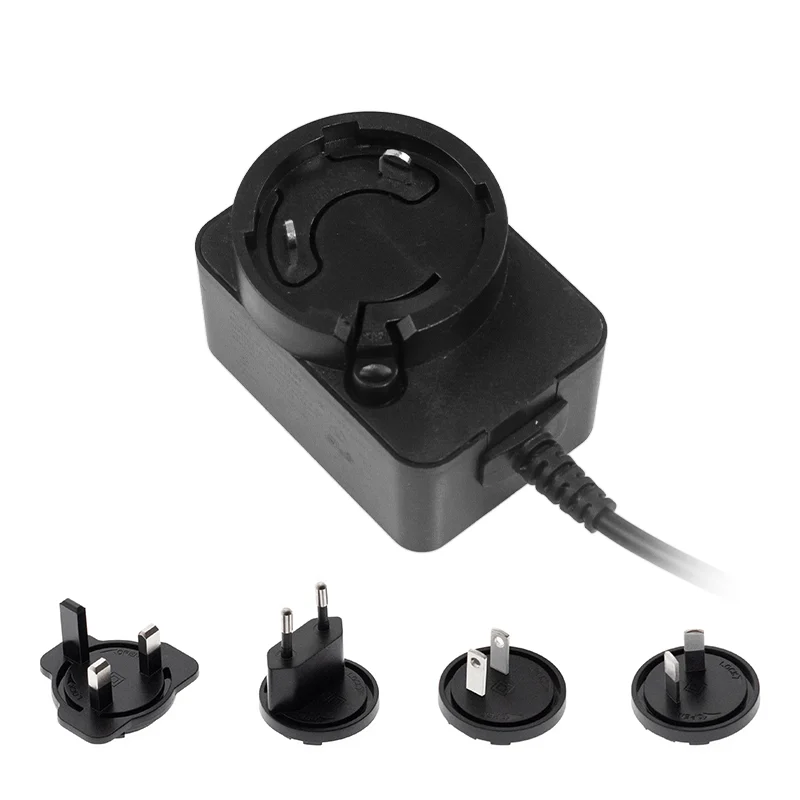
Because grid power involves high voltages, the electrical isolation within an adapter is a paramount concern for B2B buyers. A significant ac vs dc power adapter difference in professional manufacturing is the implementation of robust dielectric strength testing. Merryking adapters are constructed using flame-retardant materials and undergo rigorous high-potential testing to ensure the AC input side remains safely isolated from the low-voltage DC output. During technical audits, I prioritize solutions that offer high-standard galvanic isolation to prevent electrical leakage. Furthermore, our products integrate advanced protection suites, including Over Voltage Protection and Short Circuit Protection. These features ensure that if a power surge occurs, the adapter maintains a safety barrier rather than passing destructive energy to your expensive equipment.
In the modern era of green energy, the efficiency of the conversion process is a major regulatory benchmark. The ac vs dc power adapter difference is also measured by energy loss during operation. Older linear power supplies were often inefficient, wasting significant energy as heat. Modern switching power supplies, such as those in the Merryking AC-DC Adapter catalog, are designed to meet the latest global efficiency standards, such as DoE Level VI. These units achieve high conversion efficiency and maintain minimal standby power consumption. When managing large-scale deployments, choosing an efficient DC adapter significantly reduces the total cost of ownership by lowering electricity costs and reducing the thermal stress on the surrounding environment.
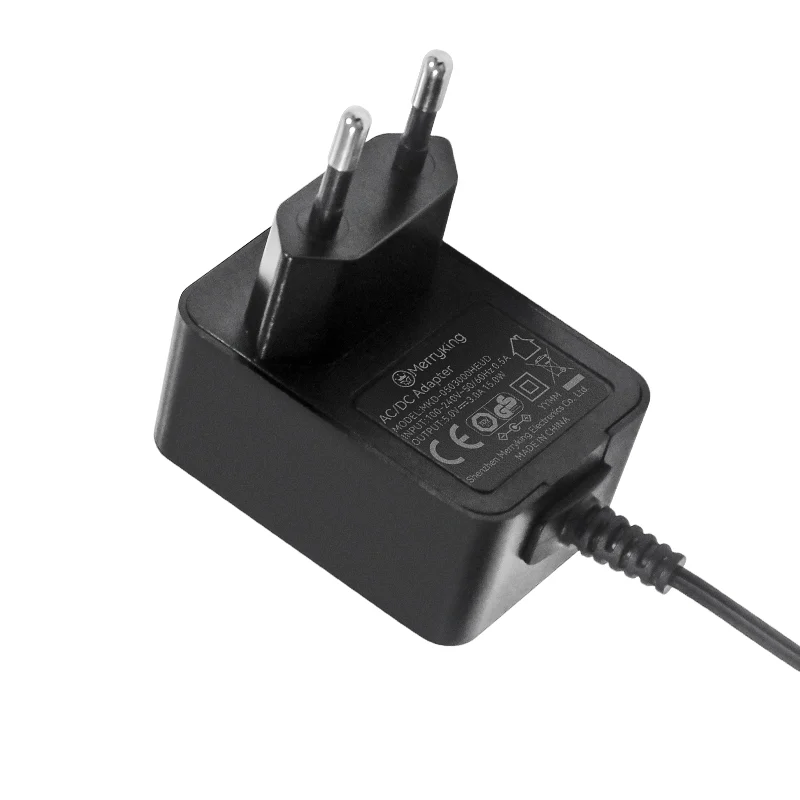
Finally, understanding the ac vs dc power adapter difference is essential for physical hardware integration. AC-DC adapters are defined by their specific output polarity and connector types. If a DC-powered device receives the wrong polarity, it can lead to instant hardware failure. At Merryking, we offer a wide array of DC plug sizes and cable lengths to ensure a secure mechanical fit for various industrial designs. Moreover, because our adapters support a wide universal input range, they are ready for global distribution. Whether your project is destined for North America, Europe, or Asia, our internal circuitry is designed to handle local grid variations and deliver the exact DC specifications required, making these adapters an indispensable component in the international supply chain.