EN
EN



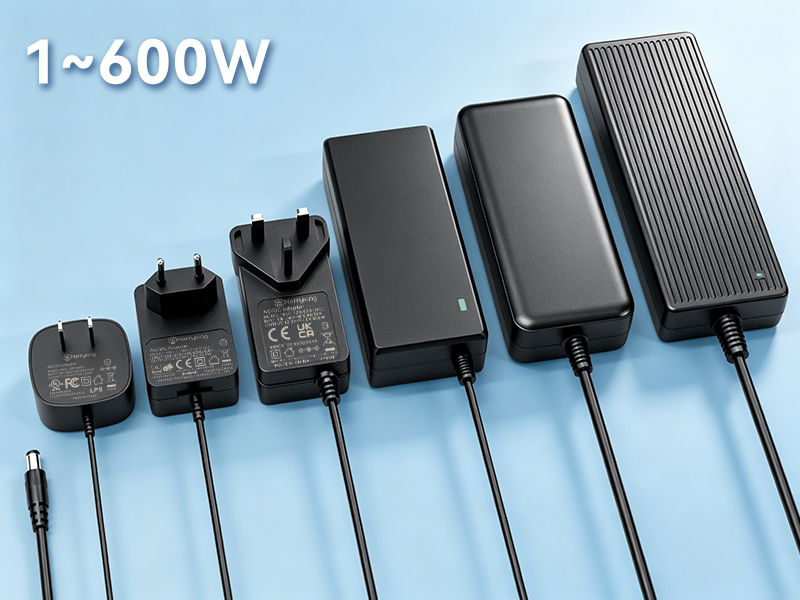
An AC DC power charger is a device that converts alternating current from a wall outlet into regulated direct current suitable for powering or charging electronic equipment. In most modern switch-mode adapters, the AC input is first filtered and rectified, then converted by high-frequency switching and isolated through a transformer, typically 100-240V, to a lower AC level appropriate for the target output. A rectifier stage using diodes or synchronous MOSFETs then converts this alternating waveform into a unidirectional pulsating DC signal. Filter capacitors smooth the resulting ripple, and a regulation stage maintains the output at the specified voltage regardless of variations in input voltage or load current. This fundamental architecture appears in adapters ranging from compact 5W USB chargers to 420W industrial desktop units. Understanding these internal stages helps buyers evaluate why two adapters with identical output ratings can differ significantly in reliability, efficiency, and electromagnetic noise performance.
The first parameter to check in ac dc power charger selection is input voltage range. A charger rated for 100-240V AC at 50/60Hz is described as a universal input design and can operate in virtually any country using only a plug adapter, without requiring a voltage converter. This is achieved through a switch-mode power supply topology that uses pulse-width modulation to regulate output across a wide input range. Some lower-cost chargers are designed for a single input voltage, such as 110V AC for North America or 220V AC for Europe, and will fail or pose a safety hazard if connected to the wrong mains supply. For international product distribution, universal input is a practical requirement that simplifies inventory management and reduces the risk of field failures caused by incorrect voltage application.
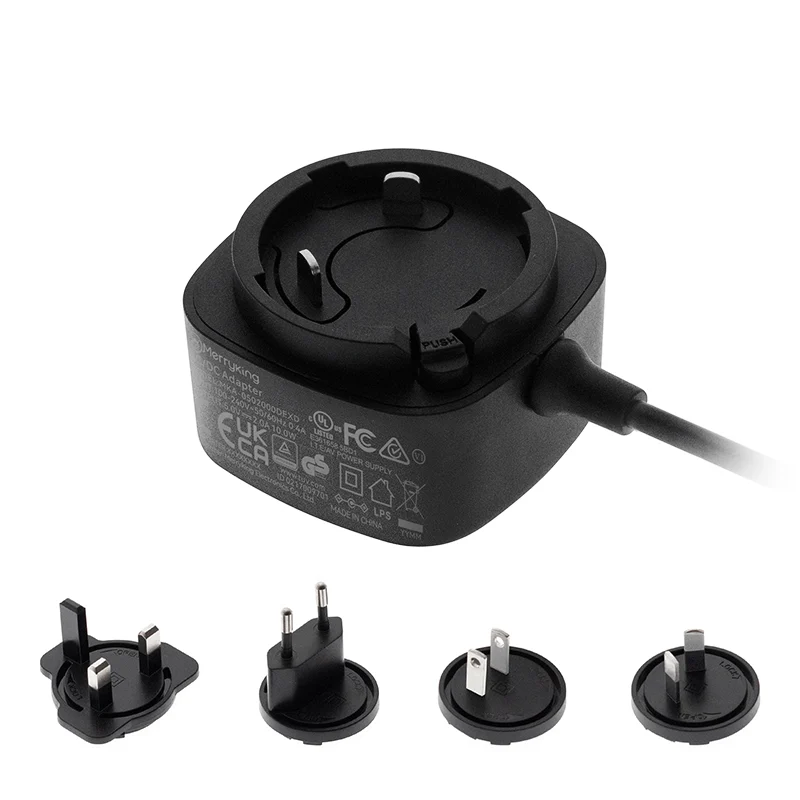
Accurate ac dc power charger selection requires matching three output parameters to the target device: voltage, current, and connector polarity. The output voltage must match the device's rated input voltage within the manufacturer's tolerance, typically plus or minus 5 percent. Using a charger with a higher voltage than specified can permanently damage the device's power management circuitry, while a lower voltage may cause erratic operation or prevent the device from powering on. The charger's current rating must equal or exceed the device's maximum current draw. A higher current rating is safe because the device draws only what it needs, but a lower rating will cause the charger to overheat and potentially fail. Connector polarity indicates whether the center pin of the barrel plug is positive or negative relative to the outer sleeve. Center-positive is the most common convention for consumer electronics, but center-negative configurations exist in some musical equipment and specialty industrial devices. Reversing polarity can destroy the device instantly, making this a critical but often overlooked selection parameter.
Efficiency is a major differentiator in ac dc power charger selection, particularly for applications where the charger operates continuously or in environments with limited ventilation.U.S. DOE Level VI requirements set minimum efficiency and no-load power limits for covered external power supplies. Compliance depends on the EPS class, output power, and test method, mandates minimum average efficiency values that vary by output power and voltage. For a typical 36W adapter, the Level VI requirement is approximately 87 percent average efficiency at 25, 50, 75, and 100 percent load points. European Union regulations under the ErP Directive impose similar requirements. Adapters that meet these standards not only consume less electricity but also generate less waste heat, which extends component lifespan and reduces cooling requirements in enclosed installations. When comparing adapters, requesting the efficiency curve across the load range provides more insight than a single efficiency number, as some designs achieve high peak efficiency but perform poorly at light loads where many devices spend most of their operating time.
A comprehensive certification portfolio is one of the strongest signals in ac dc power charger selection. Certifications are granted by independent testing laboratories after rigorous evaluation of electrical safety, electromagnetic compatibility, and in some cases energy efficiency. Key certifications include UL and ETL for the North American market, CE-LVD and CE-EMC for the European Union, GS for Germany, UKCA for the United Kingdom, PSE for Japan, SAA and RCM for Australia and New Zealand, KC for Korea, PSB for Singapore, and BIS for India. A manufacturer that maintains active certifications across multiple regions demonstrates systematic investment in compliance infrastructure. Buyers should be aware that printed certification marks on a product label are not sufficient proof of compliance; requesting the corresponding test reports and certificates from an accredited laboratory provides verifiable assurance.
A procurement team at a European IoT hardware company needed to source AC DC power chargers for a new smart home hub shipping to 15 countries. The initial requirement was a 12V 2A adapter with interchangeable plugs for EU, UK, US, and AU markets. The team shortlisted three suppliers based on unit pricing, but upon deeper evaluation, only one supplier could provide a complete certification package covering CE-LVD, CE-EMC, UKCA, FCC, SAA, and RCM simultaneously for the same base adapter design. The other two suppliers either held certifications for only a subset of the target markets or had certifications that had expired or were not renewed. The winning supplier also provided third-party EMC test reports showing conducted and radiated emissions margins of 6dB or more below regulatory limits, which gave the IoT company confidence that the adapter would not interfere with the hub's Wi-Fi and Zigbee radios. This scenario illustrates that ac dc power charger selection based solely on specification sheets and unit price misses critical compliance factors that affect time-to-market and field reliability.
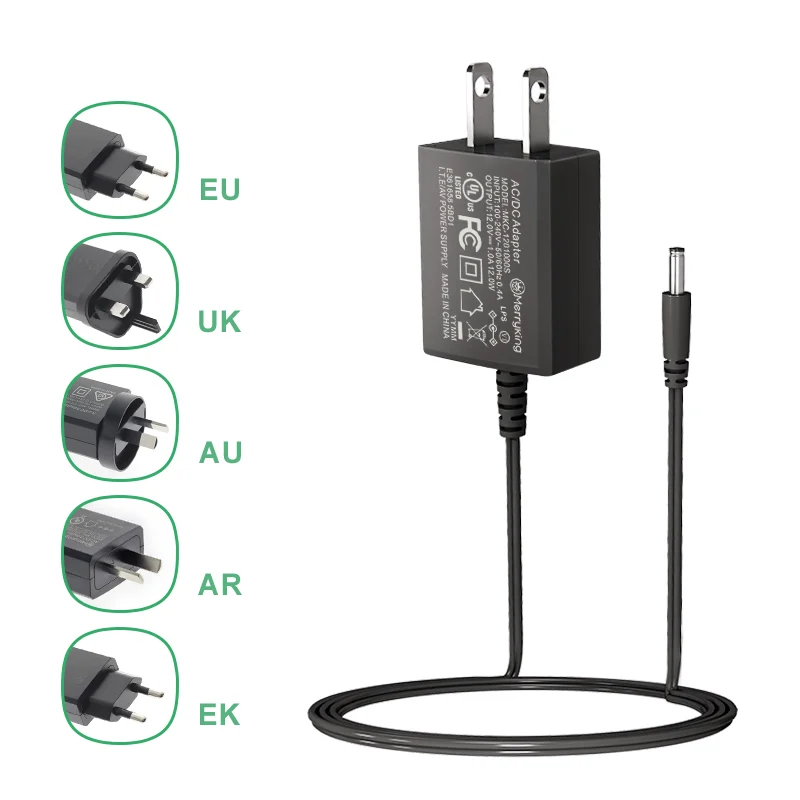
The physical and environmental demands of the application should guide ac dc power charger selection. For indoor consumer electronics in climate-controlled environments, a standard wall-mounted adapter with a plastic enclosure is typically sufficient. For industrial settings, chargers may need metal enclosures, wider operating temperature ranges from minus 20 to plus 60 degrees Celsius, and protection against dust and moisture. Medical applications impose additional requirements including low leakage current, typically below 100 microamperes, and compliance with IEC 60601 standards for electrical safety in patient-care environments. For outdoor or vehicle-mounted equipment, shock and vibration resistance becomes relevant. Matching the charger's environmental ratings to the actual deployment conditions prevents premature failures and safety incidents that can damage both equipment and brand reputation.